Distinguishing species in the Asplenium nidus group can be challenging. If anyone wants to weigh in on the identification of this plant, please comment below.

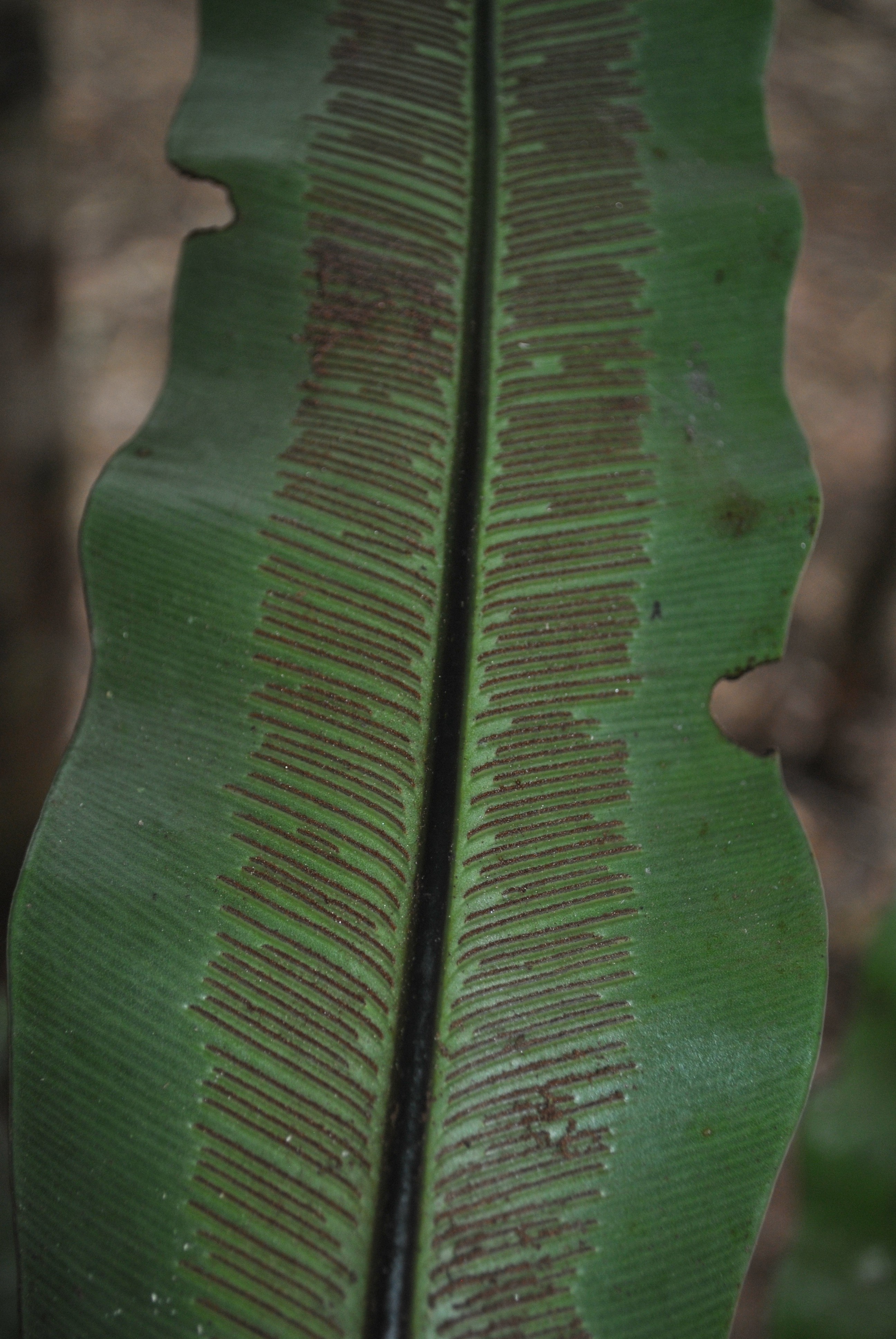
Distinguishing species in the Asplenium nidus group can be challenging. If anyone wants to weigh in on the identification of this plant, please comment below.
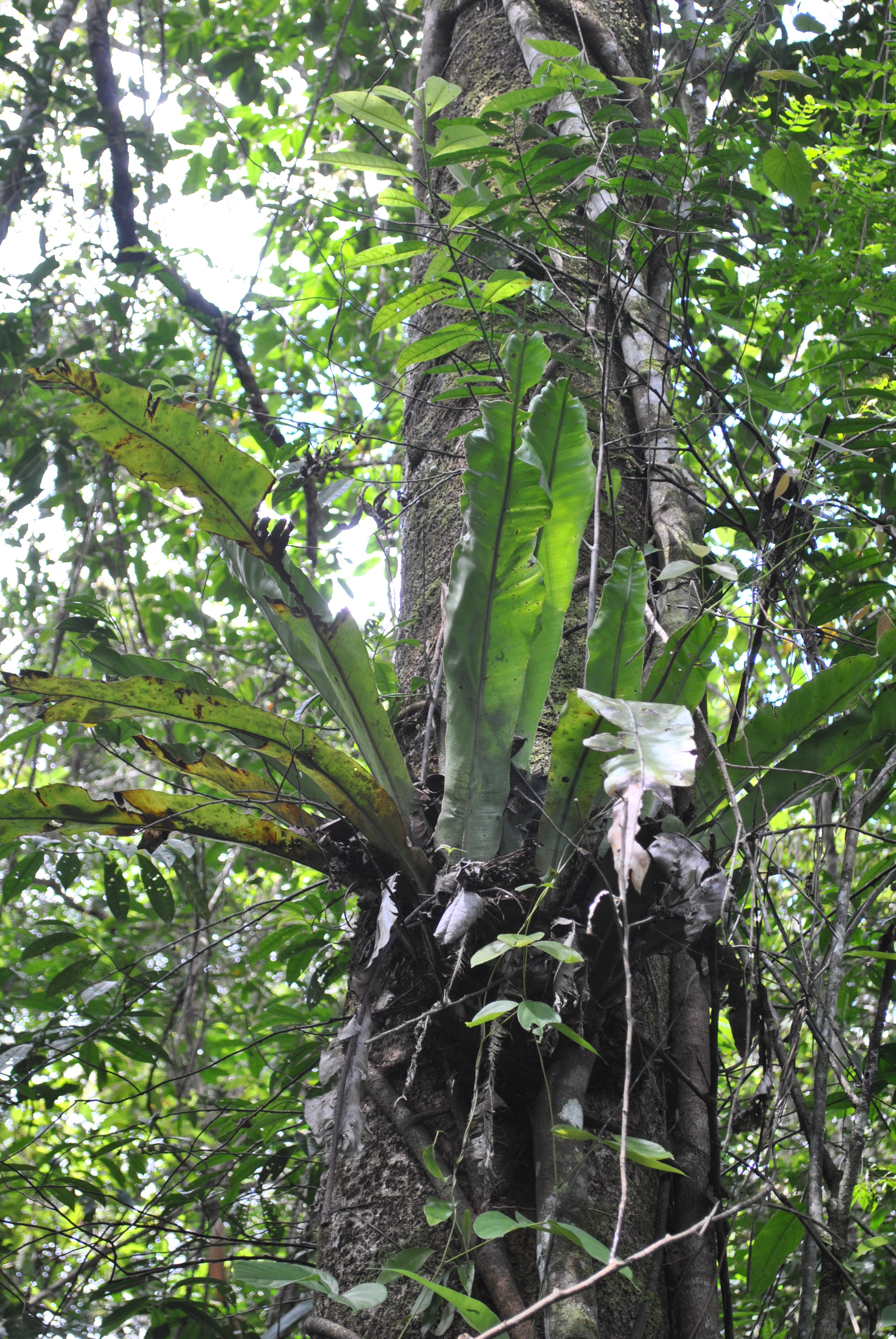
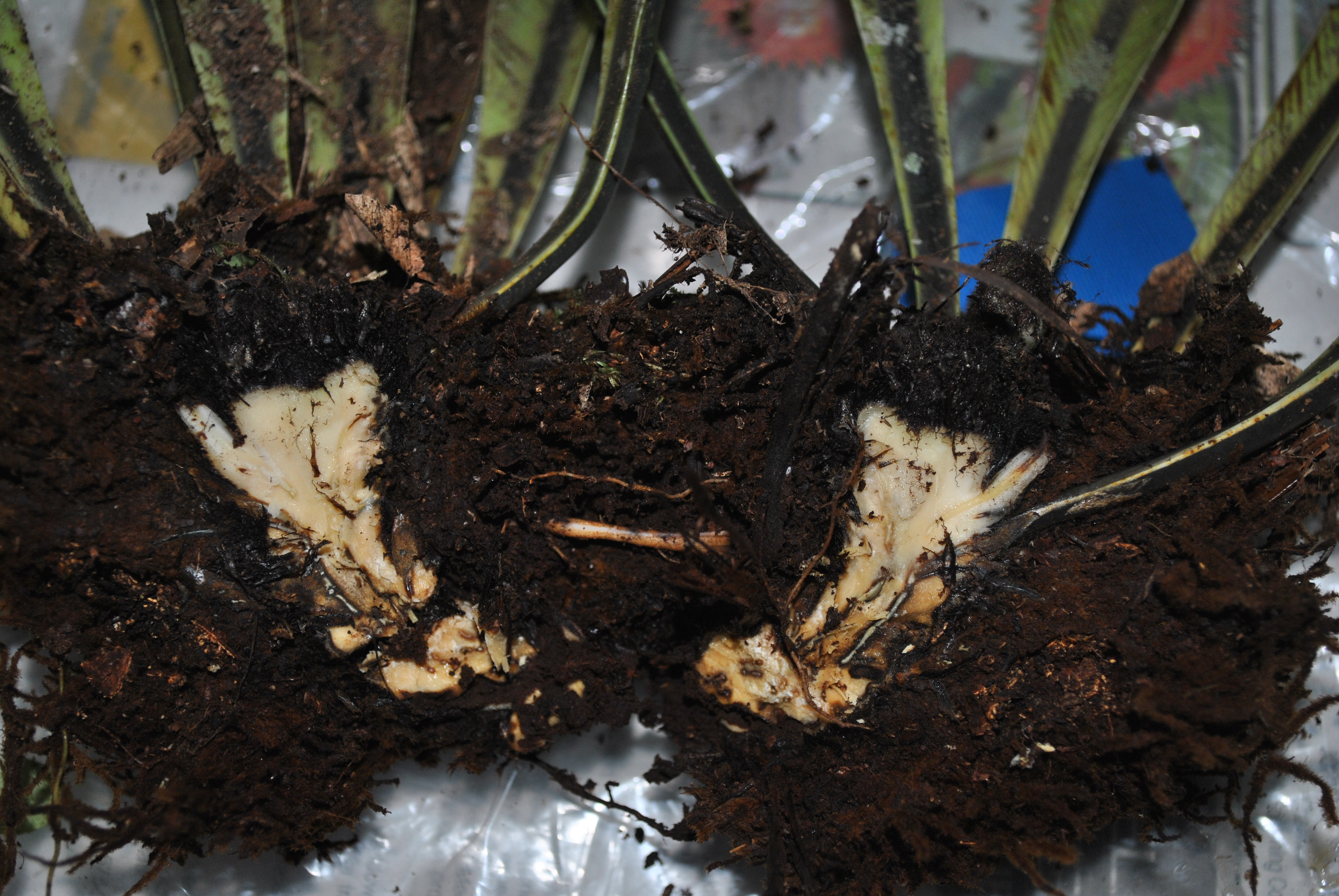

The rachis is keeled on the abaxial surface, yes? If so, that would push it towards A. australasicum. That distinction (abaxial surface of rachis keeled or not) works well in Australia, but I’ve struggled to apply it in the Pacific (where the character states seem not so discrete); I don’t know what happens in New Guinea.
Thanks for the comment Leon. I collected A. australasicum in Queensland, Australia that does have a distinctly keeled rachis exactly as you have pointed out. This plant from PNG does have a raised rachis abaxially, but the rachis is rounded, not keeled. Would you still apply the name A. australasicum knowing that?
Although I have a plant of A. australasicum here in the living room (!), I’m not sufficiently familiar with the broader group. But, no, I wouldn’t go with A. australasicum with a raised-but-rounded rachis. More work to be done in this group…
I now believe that A. musifolium is a better fit.
Hi, What is the distinguishing characteristics of nidus ang musifolium?
And also can ecological factor affect the stipe color of Asplenium?
Miriam. This is an unresolved taxonomic issue that cannot be answered without further research. But in general, A. musifolium has a broader lamina with shorter sori. The FOTW post for Sundue 4379 will give you an idea of what A. musifolium looks like. Also, this link https://nansh.org/portal/collections/individual/index.php?occid=30381988