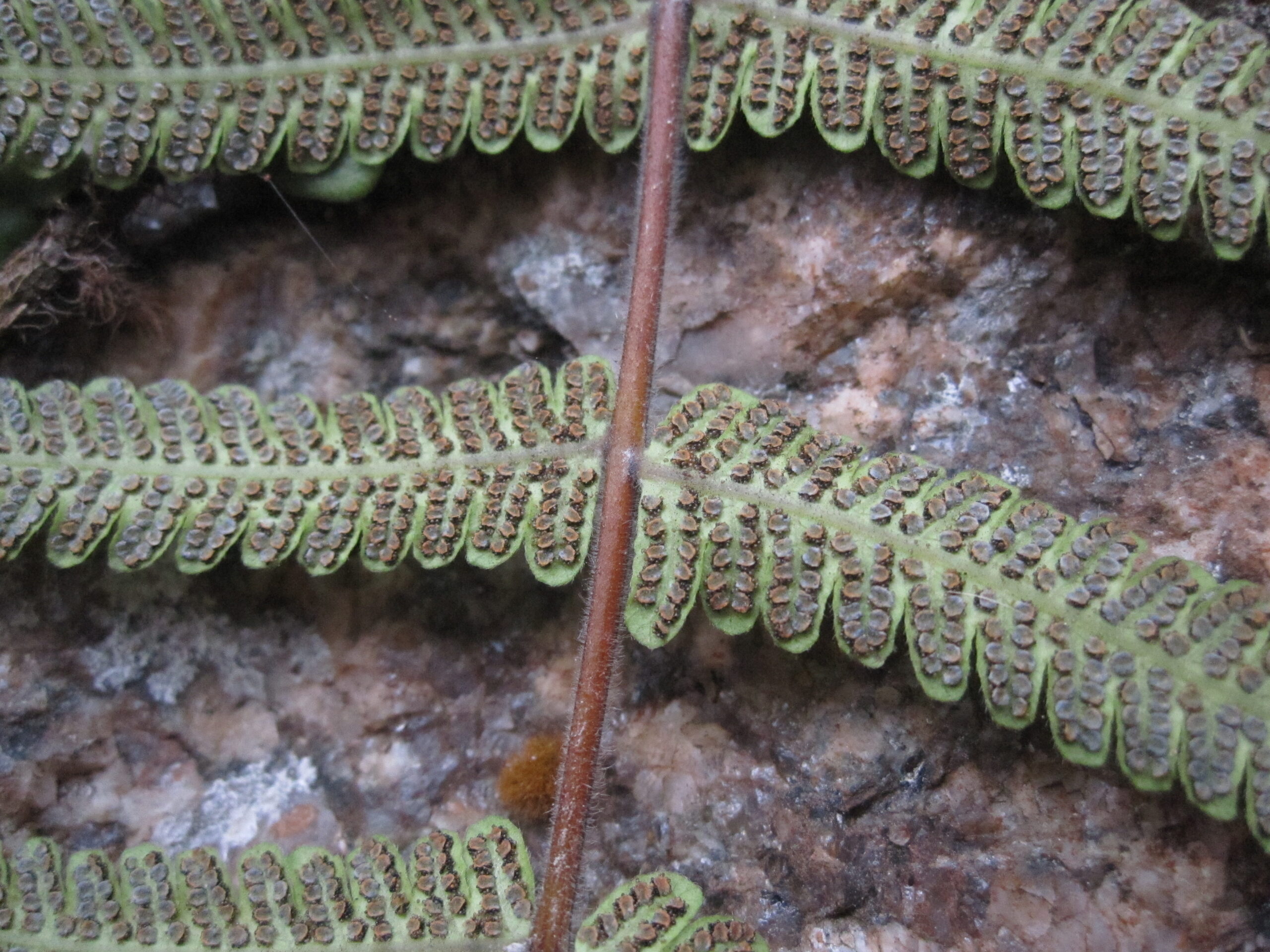
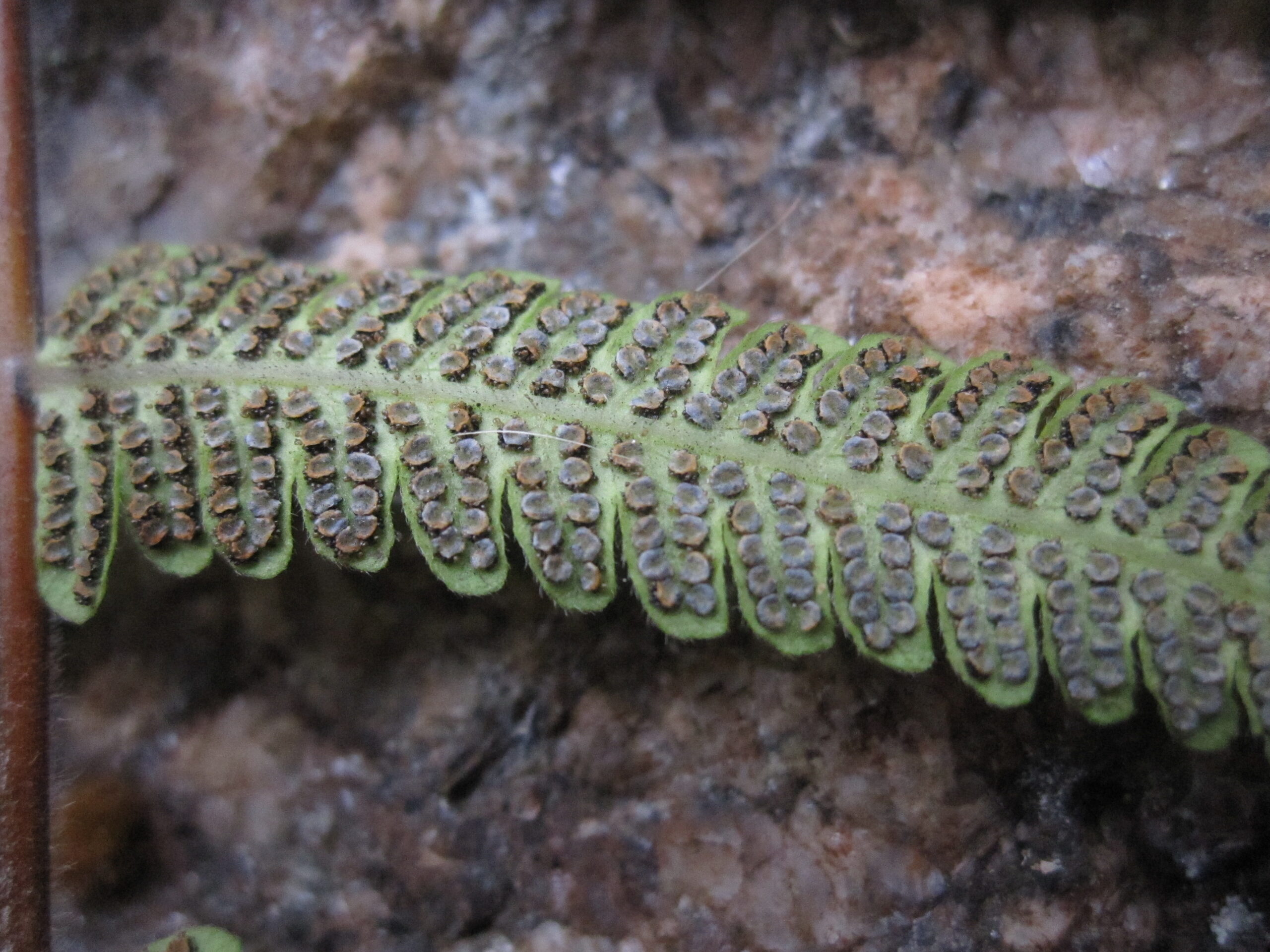
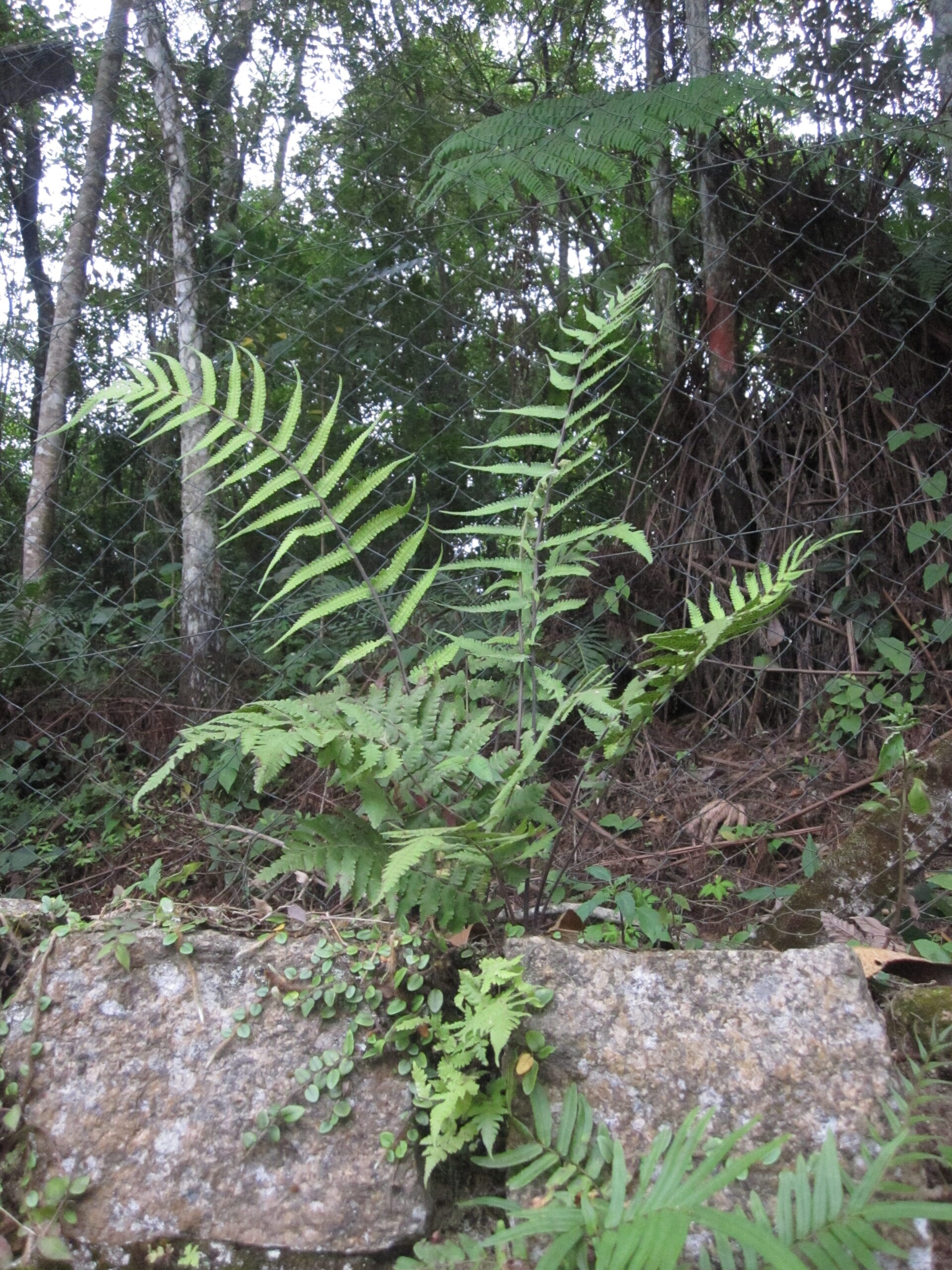
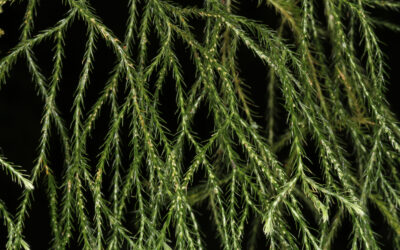
Collection data (N. P. Smith, 318 )

Classification & Common Names
Collection Data
  • Collection Date: 13-XI-2011
  • Collection Number: 318
  • Primary collector: N. P. Smith
  • Collected by: M. A. Nees
  • Determined by: M. Sundue and A. Smith (from photos).
  • Habitat: Stone wall
  • Habit: Lithophyte
  • Specimen location: FLOR
  • Observations: Fertile. 27 m elevation.
Christella dentata
Collection Location

About the Author

<a href="https://www.fernsoftheworld.com/author/nsmith/" target="_self">Nathan Smith</a>

Nathan Smith

I am an amateur botanist working on the fern and lycophyte florulas of Santa Catarina Island and the Furnas River Reserve, in southern Brazil.

You may also like:

Phlegmariurus pringlei

Phlegmariurus pringlei

Phlegmariurus pringlei was a common epiphyte in many of the sites that we visited in Oaxaca. Adventitious roots were often observed at the distal parts of its stem, apparently resulting in vegetative propagation whenever the plants touched a suitable substrate. The...
Elaphoglossum plumosum

Elaphoglossum plumosum

This beautiful species belongs to Elaphoglossum sect. Lepidoglossa. It is characterized by having abundant laminar scales, these lanceolate, silvery, setose-margined, overlapping, and usually completely covering the abaxial side of sterile leaves. It occurs in the...

4 Comments

  1. Michael Sundue

    This looks like Thelypteris dentata (Forssk.) E.P. St. John
    Notice the hyaline acicular hairs, and reniform indusia.

    Reply
  2. Nathan Smith

    Thanks. I did not notice the hairs.

    Reply
  3. Alan Smith

    I agree, Thelypteris dentata, also often known as Christella dentata. Plants of the Neotropics are all introduced, beginning ca 1900, in Brazil. Now, this species is possibly the most often collected fern in the Neotropics, from SE United States, West Indies, and Mexico to Bolivia, Brazil, and Argentina. The species is native and widespread in the Paleotropics, but naturalized and common in Hawaii and some other Pacific Islands. It is a very common greenhouse weed, as well as weedy in both its native and naturalized habitat.

    Reply
    • Nathan Smith

      Great. Thanks to both you and Michael for the det. The post has been updated.

      Reply

Submit a Comment

Your email address will not be published. Required fields are marked *

Share This